-
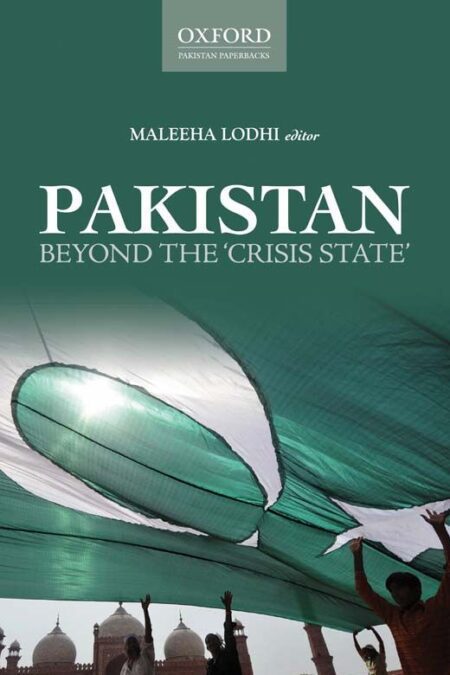
Pakistan: Beyond the Crisis State
1₨ 1,285Pakistan: Beyond the ‘Crisis State’,” edited by Maleeha Lodhi, offers an insightful exploration into Pakistan’s multifaceted challenges and inherent resilience. Moving beyond the typical focus on crises, this anthology delves into the nation’s political, economic, social, and governance dynamics, providing a comprehensive analysis of both internal developments and external influences shaping Pakistan’s trajectory.
Contributors, including esteemed scholars and policymakers, present a nuanced understanding of the country’s complexities. Historian Ayesha Jalal examines Pakistan’s historical narratives, while Akbar S. Ahmed reflects on the vision of an inclusive Pakistan as envisaged by its founder, Muhammad Ali Jinnah. Economist Mohsin Hamid addresses the challenges in tax collection hindering economic development, and journalist Zahid Hussain discusses strategies to combat militancy through political mobilization.
This volume challenges the prevailing perception of Pakistan as a nation in perpetual crisis, highlighting its diversity and potential for transformation. It serves as an essential read for those seeking a deeper understanding of Pakistan’s past, present, and the pathways to a stable and prosperous future.
-
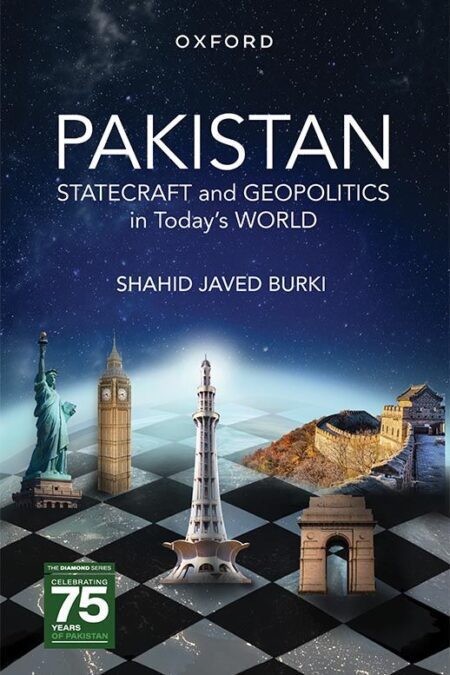
Pakistan: Statecraft and Geopolitics in Today’s World
0₨ 1,560“Pakistan: Statecraft and Geopolitics in Todays World” offers an in-depth analysis of Pakistans evolving role in global and regional geopolitics. The book examines key political, economic, and security challenges facing the country while assessing its strategic relationships with major powers, including China, the United States, and India.
With a focus on contemporary statecraft, the author explores Pakistans foreign policy decisions, internal governance structures, and economic ambitions. The book provides valuable insights into Pakistans response to shifting global dynamics, making it an essential read for policymakers, academics, and anyone interested in South Asian affairs.
-
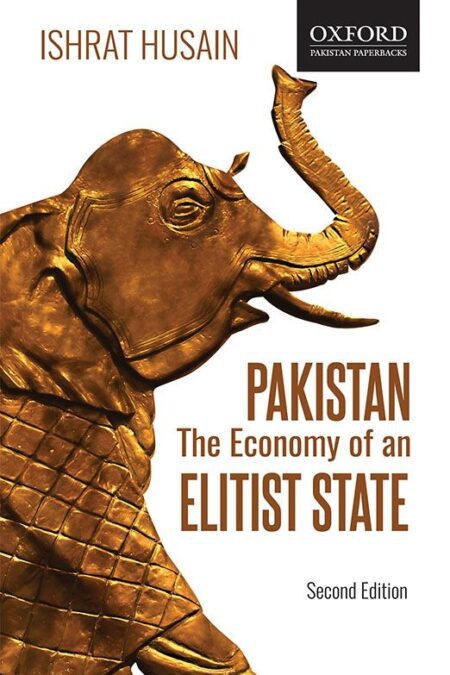
PAKISTAN: The Economy of an Elitist State
0₨ 1,105“PAKISTAN: The Economy of an Elitist State” critically examines the structure of Pakistans economy, highlighting how economic policies have historically favored a privileged elite at the expense of broader development. The author explores key sectors, including agriculture, industry, and finance, to reveal systemic inequalities that have shaped the countrys economic trajectory.
This insightful book provides a detailed analysis of governance, policy-making, and economic distribution, offering a compelling argument on why reforms are necessary for sustainable growth. Essential reading for economists, policymakers, and anyone interested in understanding Pakistans economic challenges and prospects.
-
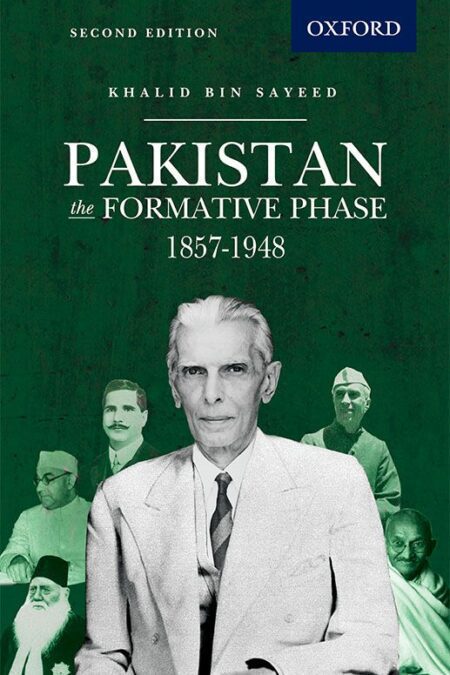
Pakistan: The Formative Phase, 1857-1948
0₨ 1,070Pakistan: The Formative Phase, 1857-1948″ by Khalid bin Sayeed offers a comprehensive analysis of the socio-political dynamics that led to the creation of Pakistan. Beginning with the 1857 War of Independence, the author examines the evolving tensions between Hindus and Muslims in the subcontinent, highlighting the factors that influenced the demand for a separate nation. This scholarly work remains a definitive resource for understanding Pakistan’s early history.
Khalid bin Sayeed, formerly a Professor of Political Science at Queens University, Kingston, Canada, brings his academic expertise to this detailed study. His other notable publications include “The Political System of Pakistan” (1969) and “Politics in PakistanThe Nature and Direction of Change” (1980).This volume challenges the prevailing perception of Pakistan as a nation in perpetual crisis, highlighting its diversity and potential for transformation. It serves as an essential read for those seeking a deeper understanding of Pakistan’s past, present, and the pathways to a stable and prosperous future.
-
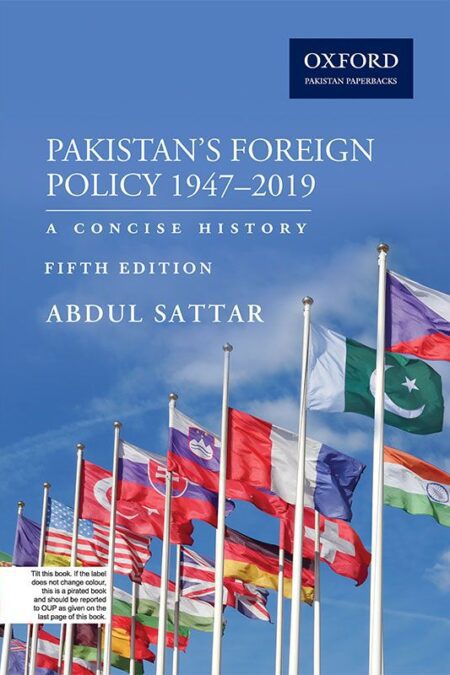
Pakistan’s Foreign Policy 1947 – 2019 Fifth Edition
0₨ 1,450“Pakistan’s Foreign Policy 1947-2019: A Concise History” by Abdul Sattar offers an objective analysis of Pakistan’s foreign policy from its inception in 1947 up to 2019. Designed as a reference for students and scholars of history, political science, international relations, and Pakistan Studies, the book delves into the rationale behind key policy decisions made by Pakistani leaders. It provides insights into the formulation, execution, and outcomes of Pakistan’s foreign policy, facilitating a deeper understanding of the strategic considerations influencing the nation’s national security and international relations.
This fifth edition incorporates updated discussions on Pakistan’s evolving relationships with India, the USA, China, and Afghanistan. It also addresses significant developments in areas such as terrorism, the Kashmir conflict, and dynamics in the Middle East, reflecting the latest geopolitical shifts and challenges faced by Pakistan on the global stage.
Abdul Sattar, a distinguished diplomat with a 39-year career in the foreign service, served as Foreign Secretary and twice as Ambassador to New Delhi. His firsthand experience and scholarly approach make this work an authoritative resource for understanding the complexities of Pakistan’s foreign policy.
-
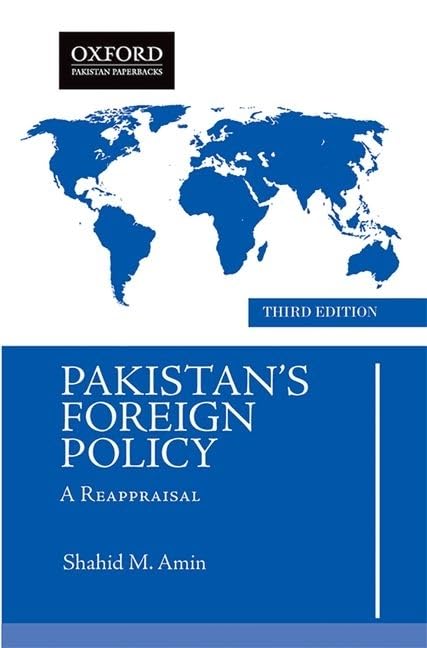
Pakistan’s Foreign Policy: A Reappraisal Third Edition
0₨ 600Pakistans Foreign Policy: A Reappraisal” by Shahid M. Amin offers a comprehensive analysis of Pakistan’s foreign policy from its independence in 1947 through the early 21st century. Drawing from his 39-year diplomatic career, Amin examines the structural shortcomings in policy formulation and advocates for a reassessment of Pakistan’s approach, particularly concerning India and the Kashmir issue. This third edition includes a new introduction and a chapter covering developments from 2010 to 2020, making it an essential resource for understanding the evolution of Pakistan’s international relations
-
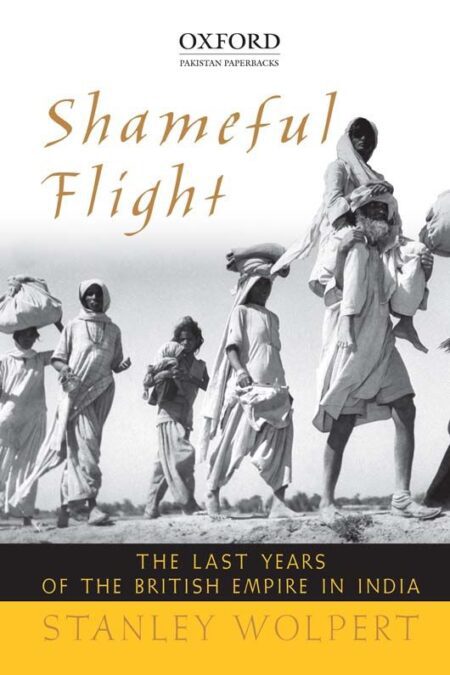
Shameful Flight
0₨ 985*”Shameful Flight”* provides a gripping account of Britain’s hurried and chaotic withdrawal from India in 1947, leading to the tragic partition of the subcontinent. The book explores the political miscalculations, failed leadership, and hastened decision-making that resulted in one of the largest and most violent mass migrations in history.
Through meticulous research, the author sheds light on the roles of key figures such as Winston Churchill, Clement Attlee, and Lord Mountbatten, offering a compelling narrative of decolonization and its consequences. A must-read for history enthusiasts, scholars, and anyone interested in the legacy of British colonial rule in South Asia.
-

The Unfinished Nation A Concise History of the American People Ninth Edition
0₨ 2,000The Unfinished Nation: A Concise History of the American People (Ninth Edition) offers a compelling and balanced narrative of American history, exploring the nation’s evolution from its early beginnings to the present. Written in an engaging and accessible style, this book provides a thorough yet concise account of key historical events, social movements, and political developments that have shaped the United States.
With a strong emphasis on diversity, inclusion, and the ever-evolving American identity, this edition incorporates recent historical scholarship and contemporary perspectives. Richly illustrated and thoughtfully structured, it is an ideal resource for students, educators, and history enthusiasts seeking a deeper understanding of America’s past.
Perfect for classroom use or personal study, The Unfinished Nation presents a dynamic and thought-provoking overview of the American experience, making history both relevant and engaging.
-
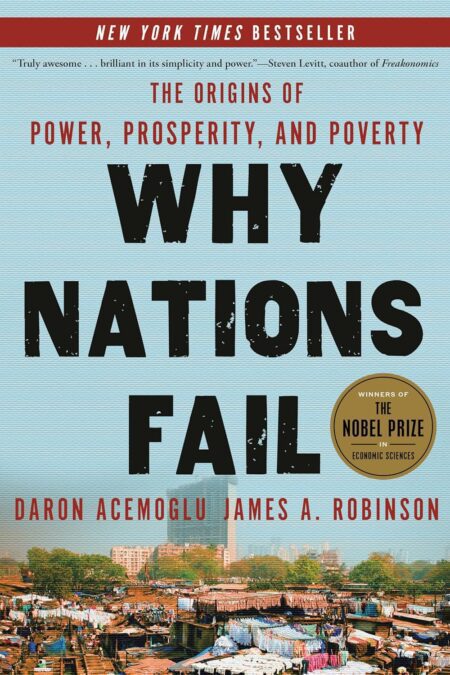
Why Nations Fail The Origins Of Power Prosperity And Poverty
0₨ 1,200Why Nations Fail: The Origins of Power, Prosperity, and Poverty by Daron Acemoglu and James A. Robinson examines the underlying causes of economic disparities among nations. The authors argue that the prosperity of a nation is primarily determined by its political and economic institutions. They differentiate between inclusive institutions, which promote innovation and shared wealth, and extractive institutions, which concentrate power and wealth among elites, leading to stagnation. Through diverse historical and contemporary case studies, including examples from the Roman Empire, medieval Venice, and modern-day Korea, the book illustrates how institutional frameworks shape the economic trajectories of societies. This insightful analysis challenges conventional explanations that attribute national success or failure to culture, geography, or ignorance, offering a compelling perspective on the pivotal role of institutions in shaping the fate of nations.